Latest Dating Photo Statistics: What the Evidence Really Shows
Dating photo statistics without the hype: what is well established about match rates, photo types and trends, and which popular numbers have no source.

An honest look at what is actually known about dating photos on the major apps, and where the popular numbers come from.
Why many dating photo statistics don't hold up
Most figures quoted online (exact match-rate lifts, "320% more matches", user counts by photo type) have no published method behind them. The apps rarely release photo-level data, so treat precise percentages with caution, including those in earlier versions of this page. Below we keep what is well established and describe the rest as patterns, not measurements.
The overall platform picture
Active users: the big apps report user numbers in their own investor and press materials. They change every quarter, so check the latest company report rather than a blog figure. Photos per profile: most apps let you add several photos, and filling most of the slots is common advice. Verified profiles: Tinder, Bumble and Hinge all offer photo verification, and badges are far more common than a few years ago.
Match rate benchmarks
What is known:
- On mainstream swipe apps, men match on a much smaller share of their right swipes than women.
- Academic research on Tinder has documented this gap, but no app publishes current averages.
Strong performers:
- Profiles with clear, recent and varied photos tend to sit at the top of either group.
- Swiping selectively matters as much as the photos themselves.
Photo quality impact
High quality vs low quality photos:
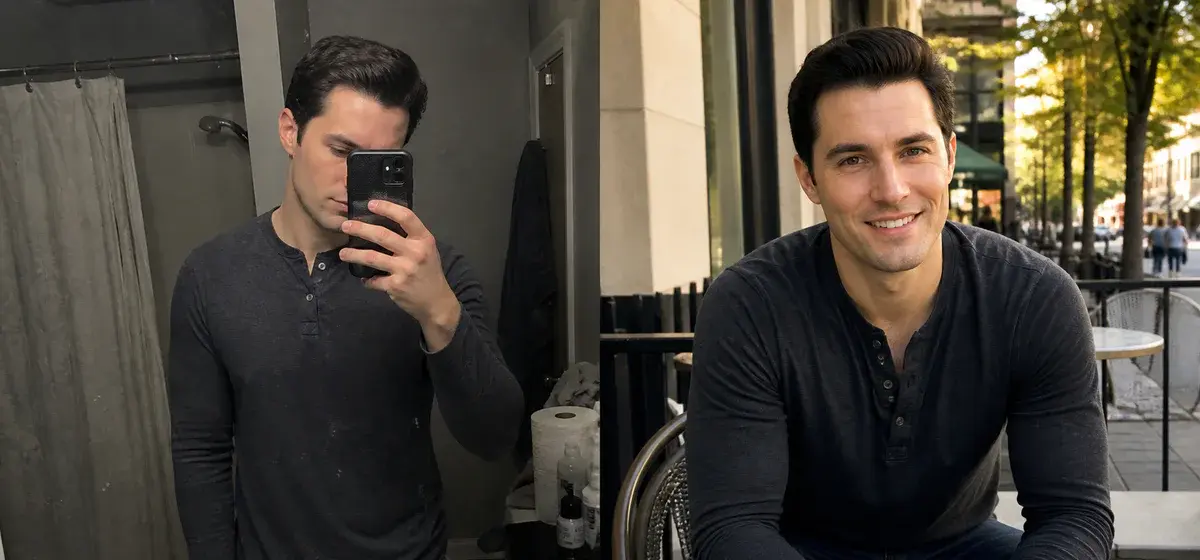
- Sharp, well-lit photos are consistently judged more favourably than blurry or dark ones.
- Better photos usually bring more profile views and more replies, but the size of the effect varies by person and app.
AI-enhanced photos:
- Use is growing, especially for retouching and background fixes.
- They only help if you still look like yourself; photos that do not match you in person backfire.
- Several apps have rules on misleading images, so check the current guidelines.
Photo type performance
Photo types that usually help:
- Clear headshot with a genuine smile
- Outdoor activity photo
- Travel photo
- Photo with a pet
- Full body photo
- Hobby or interest photo
- Group photo (one at most, not first)
- Candid moment
Photo types that usually hurt:
- Bathroom mirror selfie
- Sunglasses in the main photo
- Gym mirror selfie
- Car selfie
- Heavy filters
- Group photo as the main picture
Technical specifications
Resolution:
- Minimum: a sharp image from any recent phone camera
- Recommended: full-resolution originals, not screenshots
- Beyond that: 4K adds little once a photo is sharp
File formats:
- JPEG is the safest choice across apps
- PNG works too
- HEIC is usually converted automatically on iPhone
Demographic insights
Age groups: most dating app users are in their twenties and thirties, with a growing number of people over 45, often on apps built for them.
Gender balance: mainstream swipe apps generally have more men than women, which is one big reason men see lower match rates.
Behavioral patterns
Viewing time: people decide on a profile in seconds, mostly from the first photo. App opens: many users check apps several times a day in short sessions. Conversations: plenty of matches never turn into a chat, so an easy opener in your photos or prompts helps.
The dating funnel
Every step loses people:
- Profile views to matches: only a small share
- Matches to conversations: many never start chatting
- Conversations to dates: a minority
- Dates to second dates and relationships: depends on the people, not the photos
Platform-specific notes
Tinder:
- One of the largest dating apps worldwide
- Very fast, photo-first decisions
- Up to nine photos
Bumble:
- Large user base
- Photo verification available
- Women make the first move in opposite-sex matches
- Many users say they want something serious
Hinge:
- Six photos or videos plus prompts
- Positions itself as "designed to be deleted"
- Prompts make it easy to start a conversation
Cost and value
What people spend money on:
- Professional photos: often a few hundred dollars, depending on city and photographer
- AI photo tools: usually much cheaper
- Premium subscriptions: monthly fees that add up over a year
Value: there is no reliable return-on-investment figure for any of these. If your current photos are weak, better photos tend to pay off more than paid features.
Emerging trends
Video: more apps support short clips in profiles. Voice prompts: Hinge and others let you record audio answers. Filters: light retouching is common, heavy filters are frowned upon. Live and moving photos: offered by some apps, still a niche.
Safety and verification
Photo verification: increasingly common across the major apps. Benefits of verification:
- A visible trust signal
- Reassures matches that you are real
- Can make conversations feel safer
Seasonal patterns
Busier times:
- January, after the holidays (the apps regularly report a New Year peak)
- Early autumn
- Sunday evenings
Quieter times:
- Summer holidays
- Late December
What to expect next
Likely trends:
- More AI features inside the apps
- More video in profiles
- Wider use of verification
- Experiments with new formats
Key takeaways
- Photo quality matters more than ever
- AI enhancement is common, but it must still look like you
- Authenticity valued alongside quality
- Verification becoming standard
- Video and multimedia growing
- Platform algorithms more sophisticated
- User expectations higher
Practical optimization
The pattern is clear even without precise numbers: invest in quality photos, keep them authentic, update them regularly and use AI enhancement responsibly.
The Ultimate Profile helps you create photos that follow these principles on every major platform.